Things Your Mammographer Wants You to Know
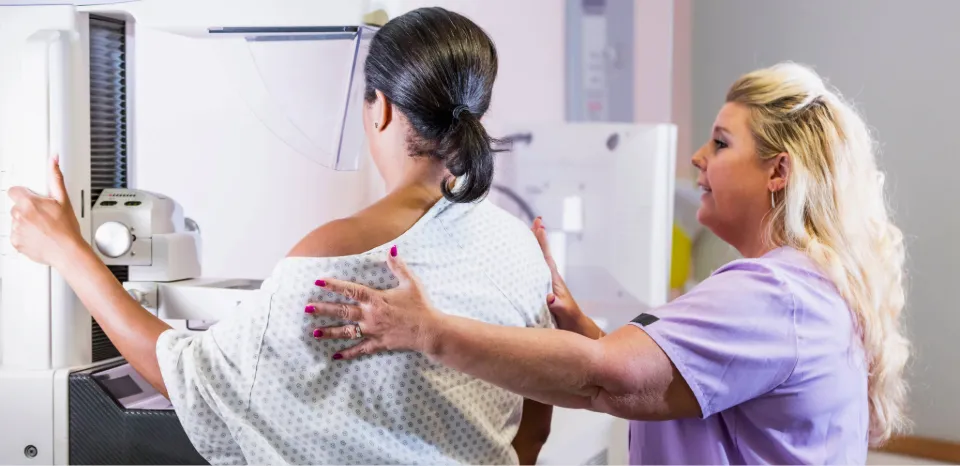
Hi! I’m your mammographer. I’m here to help you get through one of the least relaxing appointments you’ll ever have while reminding you why it matters. And as a breast cancer survivor myself, I know how much these exams can mean.
Let’s clear a few things up.
1. They’re Just Hands and Feet to Me.
Seriously! I’m concentrating on positioning, images, and making sure we get the best pictures possible. I promise I’m not judging your body, your stretch marks or anything else. We’re all business in here!
2. I Know You Have a Million Other Things to Do.
I get it! But taking a few minutes for your mammogram is one of those things your future self may be very glad you did.
3. Relax? At a Mammogram?
There is absolutely nothing relaxing about having your breast positioned on a plate and gently encouraged to become a pancake. And no — no one is magically relaxed just because we tell them to be! But the more you can relax your shoulders and let your muscles go, the easier positioning can be. We’ll work together to make it as comfortable as possible.
4. A Callback Is NOT a Cancer Diagnosis.
Getting called back means we need another look. That’s it. Sometimes we need additional pictures or an ultrasound to get a clearer answer. Many callbacks turn out not to be cancer. Try not to let Google convince you otherwise before you even come back!
5. Waiting for Your Results Isn't a Game of Medical Hide-and-Seek.
How long it takes for your exam to be read tells you absolutely NOTHING about whether your results are good or bad. It depends on workflow and scheduling, the radiologist, and a whole lot of things that have nothing to do with what your images show. Please don’t assume no news is bad news — or that a quick result automatically means everything is fine. Follow up with your healthcare team if you haven’t received your results when expected.
6. The Gown Situation Is a Little Backward.
Most of the time you’re getting care, you open your gown in the back. In mammography, we like to keep things interesting: open in the front, like a jacket! But honestly, we’re only exposing one side at a time anyway, so don’t stress about getting it perfect. We’ll help you figure it out.
7. On a Mammogram, Breast Tissue Can Look a Little Like Jell-O With Fruit in It.
Breasts are made up of different types of tissue, including fatty and fibroglandular (dense) tissue. Think of fatty tissue like the clear Jell-O: X-rays can see through it more easily. Dense tissue is like the fruit in the Jell-O: It can make it harder to see what’s underneath because it appears white on a mammogram, just like many cancers do. That’s why breast density matters. Dense breasts can make mammograms harder to read and are also linked to a higher risk of breast cancer. Your mammogram report can tell you about your breast density.
8. 3D Mammography Is Basically Breast Imaging in Layers.
Instead of taking just one picture, 3D mammography takes multiple low-dose X-ray images from different angles. A computer reconstructs them into thin slices that the radiologist can scroll through, helping separate overlapping tissue and making certain findings easier to evaluate. Think of it as looking through the pages of a book instead of trying to read the entire book with all the pages stacked together!
9. We Know It’s Uncomfortable. We’re Not Pretending It Isn’t.
We know the compression can be uncomfortable, and we know the whole experience can feel awkward. We do this every day, but we never forget that it might be your first mammogram, your tenth or the one that brings back some difficult memories. Tell us if something hurts, if you need a moment, or if you’re nervous. We’re listening.
10. When You Apologize for Your Body
Trust me, I see breasts all day, every day. You don't need to apologize for your body. We're focused on getting great images, not judging you.
11. “I Don’t Have a Family History, So I’m Fine.”
Breast cancer doesn’t check your family tree before it shows up. Many people diagnosed with breast cancer have no known family history. Follow the screening recommendations that are right for you and talk with your healthcare provider about your personal risk.
12. And Finally, From one Survivor to All Of You
Breast cancer doesn’t always come with a lump, pain or any warning signs you can feel. Screening mammograms can help detect breast cancer before symptoms develop. Please make time for screening based on your age, risk factors and healthcare provider’s recommendations. Know your body, follow up on changes and don’t put yourself last on your own to-do list. Because behind every mammogram is a real person. And sometimes, the person positioning you knows firsthand just how much this appointment can matter. Schedule your mammogram and encourage the people you love to do the same.
Learn more about our Comprehensive Breast Program.
Call 855-UMASS-MD (855-862-7763) to schedule your mammogram today.
Guest Blogger: Leah Berthiaume, BS, RT (R)(M), Radiologic Technologist, Mammographer, UMass Memorial Health
Note: The content of this blog is for informational purposes only. It is not intended for use as diagnosis or treatment of a health problem or as a substitute for the professional consultation of a physician or qualified health care provider. If you have specific questions or concerns regarding a health or medical condition, contact your physician or a licensed health care professional.
You May Be Interested In
Your Breast Cancer Risk Using the Tyrer-Cuzick Calculator

Breast Health: Is 3D Mammography Right for Everyone?