
What Patients Should Expect During Radiation Therapy
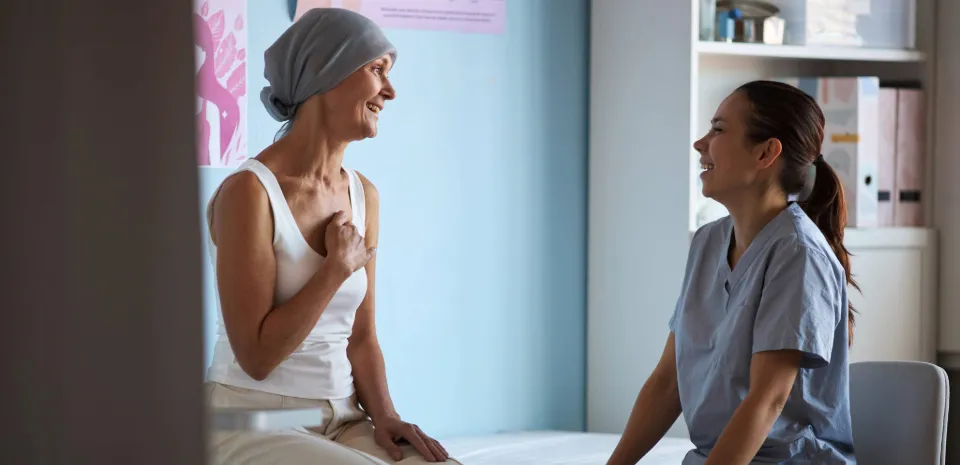
Learning that radiation therapy is part of your cancer treatment plan can bring up a lot of questions. What will treatment be like? Will it hurt? Can you continue your normal activities?
To help patients feel more prepared, we asked Allison Sacher, MD, radiation oncology, to answer some common questions about radiation therapy.
What is radiation therapy, and why is it used to treat breast cancer?
Radiation therapy uses precisely targeted, high-energy radiation to destroy cancer cells while limiting exposure to nearby healthy tissue. For many patients, it’s recommended after surgery to reduce the risk of cancer returning in the breast, chest wall or nearby lymph nodes.
Radiation therapy is often one part of a comprehensive treatment plan that may also include surgery, chemotherapy, hormone therapy or targeted therapies.
Will radiation therapy hurt?
No. Radiation treatment itself is painless.
Many patients are surprised to learn that they won’t feel anything during the treatment. The experience is similar to having an X-ray. The machine doesn’t touch you, and most treatments take only a few minutes.
What happens during my first appointment?
Before treatment begins, you'll have a planning appointment called a simulation. A simulation is a specialized CT scan which recreates your body in the treatment planning computer. During this visit, your care team will identify the exact area to be treated and create a personalized treatment plan.
Your radiation oncology team will review the process, answer your questions and explain what to expect during the weeks ahead.
How long does treatment take?
Every patient is different, but many breast cancer radiation treatments are delivered once daily, Monday through Friday, for several weeks. The daily treatment appointments are typically 15 minutes. Most appointments take less than 30 minutes from arrival to completion. Your radiation oncologist will discuss the treatment schedule that’s right for you.
Can I continue working and doing my normal activities?
Many patients continue working, exercising, caring for family members and participating in their usual routines during treatment.
Some people experience fatigue as treatment progresses, so it’s important to listen to your body, stay hydrated, eat nutritious foods and get enough rest.
What side effects should I expect?
Prior to your first treatment, you'll meet with one of our nurses to review strategies to keep yourself feeling good throughout treatment. Side effects vary from person to person, but the most common include:
- Fatigue
- Mild swelling or tenderness in the treated breast
- Skin irritation, redness or darkening in the treatment area
- Itching or sensitivity similar to a mild sunburn
Most side effects develop gradually and improve after treatment is completed.
Your radiation oncology team will monitor you closely throughout treatment and provide recommendations to help manage any symptoms.
How can I care for my skin during treatment?
Your care team will provide personalized instructions, but general recommendations may include:
- Using approved moisturizers on the treated area
- Wearing soft, comfortable clothing
- Avoiding harsh soaps, perfumes or irritants on treated skin
- Protecting the area from sun exposure
Always check with your radiation team before using new creams or skin care products.
Will I be radioactive after treatment?
No. Patients receiving external beam radiation therapy, the most common type of breast radiation treatment, are not radioactive during the course of treatment. It’s safe to be around family members, children, friends and pets.
How often will I see my care team?
Throughout treatment, you'll meet regularly with your radiation oncology team so they can monitor your progress, discuss any side effects and answer questions. Our goal is not only to deliver effective treatment but also to help you feel supported every step of the way.
When should I call my care team?
Call your radiation oncology team if you have side effects that are getting worse or making it hard to get through your day. You don’t have to wait until your next appointment to ask for help. Contact your care team if you notice:
- Skin that becomes very red, painful, swollen, or blistered, or starts to peel
- Open wounds with drainage or bleeding in the treated area
- Fever or chills
- Breast, chest wall or arm swelling that gets worse
- Pain that is new, severe or not improving
- Fatigue that makes it hard to do normal daily activities
- Nausea, appetite changes or trouble staying hydrated
- Any symptom that worries you or feels unusual
Your care team can recommend ways to manage symptoms and help you decide whether you need to be seen. If you’re unsure whether something is normal, it’s always OK to call.
What advice would you give someone preparing for radiation therapy?
Ask questions, stay connected to your care team and remember that you are not going through treatment alone.
Many patients tell us they feel less anxious once treatment begins because they know what to expect. Understanding the process, communicating concerns, and accepting support from loved ones and your healthcare team can make a meaningful difference in your experience.
Note: The content of this blog is for informational purposes only. It is not intended for use as diagnosis or treatment of a health problem or as a substitute for the professional consultation of a physician or qualified health care provider. If you have specific questions or concerns regarding a health or medical condition, contact your physician or a licensed health care professional.
You May Be Interested In

Breaking Down Cancer and Genetics

Understanding Lymphedema After Cancer: What You Need to Know