
A Dad on a Mental Health Mission: Reinforcing the Three Rs
The other day, my oldest son said words every parent will hear at some point or another. “I don’t want to go to school.” But, as a dad, I could tell by the look in his eyes this wasn’t one of those days where he just wanted to stay home and watch TV or play with Legos instead of going to school. There was something more going on behind those eyes that he wasn’t telling me. I was concerned for his mental health.
The words, “I don’t want to go to school” felt like a dagger through my heart. “What’s going on, bud?” I gently asked him as the tears welled up in his blue eyes. “Why don’t you want to go to school? “Everything is moving too fast,” he told me as he tried to regain his composure. Now that the pandemic is in our rearview window, it’s easy to forget how much of an impact it had on our children. Their worlds were flipped upside down. For some, social skills diminished, and learning was impeded. And the impacts linger today.
When school returned to normal, we went into the new year knowing it wasn’t going to be a seamless transition for our oldest of three. As someone who has struggled with his own mental health, I had concerns about those lingering impacts. As we moved on to normalcy, and as we navigate our children’s need for structure, our family follows the three R’s, a practice referenced by UMass Memorial Medical Center - Children’s Medical Center child psychologist Jessica Griffin, PsyD: reassurance, routines, regulation.
The three R's can help children feel safe, supported, and better equipped to manage their emotions and daily transitions, especially during challenging times. This approach makes family life more predictable and helps everyone talk about and manage emotions together.
The Three Rs in Action
Reassurance was an important first step in getting him on the bus that morning.
Reassuring children that at the end of the day they’re safe, they are loved, and the grown-ups are doing everything they can to make sure those things happen.
Our son needed a little extra help, but he didn’t know how to say it because he was still finding his footing in school. My wife and I reassured him how we would take a little extra time after school to make sure he understands the tasks he’s receiving in class. We also explained that we’d reach out to his teacher and see if there was anything else we could do at home to make him feel more comfortable in class.
The next important step was finding a routine.
Children benefit very much from having routines and things that are predictable. It sends signals to the brain that they are safe, Dr. Griffin explains. As a family, we worked together to establish a routine that was consistent seven days a week.
- Wake up
- Potty
- Breakfast
- Get dressed
- Timer indicating it’s time to put on our coats and go outside for the bus
We illustrated each task on construction paper and taped it to his bedroom door and the front door. Each task had a time assigned as it appears on the digital clock in our living room. The reminders have helped him reinforce the routine, budgeting his time and preparing for the day.
The final “R” was regulation.
Dr. Griffin adds that regulation happens in two ways: first, it calms the body's stress response. Second, it teaches children to better understand or talk about feelings.
Since starting our little family, my wife and I have made talking about our mental health a priority because we understand how it can create a tidal wave of anxiety and anger if bottled up too long.
Parenting is like trying to build a plane while flying. There are so many variables that are impacting you, your children and the world that surrounds us. Having open conversations during early childhood years is very tricky - and I’m far from an expert.
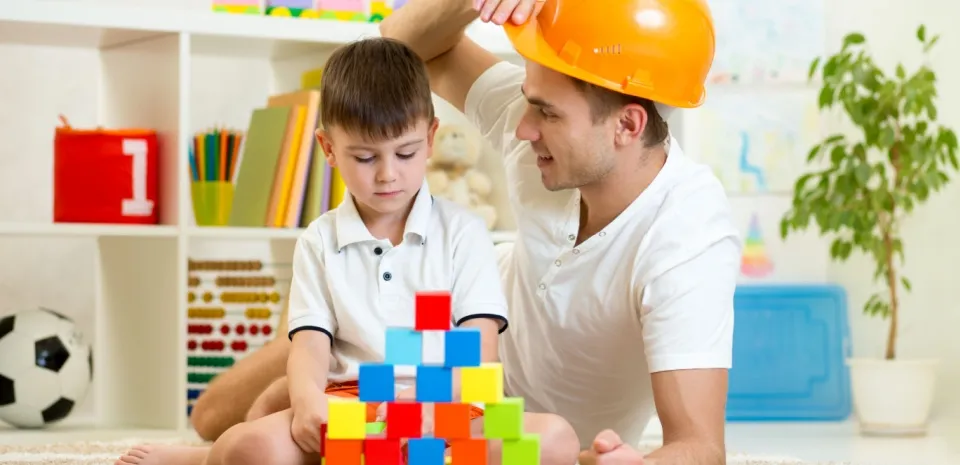
One strategy I use is to find an activity your child is enthusiastic about. My son loves building, whether it be LEGO or Minecraft. When it comes to his feelings, I try to immerse us in the activity he enjoys before broaching the difficult topic. The comfort and familiarity of the building activity usually help him open up about his feelings. It’s reassuring to me, as a parent, to know he believes he has a safe space to talk about his feelings with me.
As we navigate the ever-changing world of parenting, I urge parents to continue to communicate with their children, no matter the age, about how they’re feeling mentally. If needed, use the three R’s like a roadmap when communicating with them. If they need additional help a parent can’t provide, bring it to the attention of the child’s primary care physician so they can provide the next steps.
Guest Blogger: Danny Quin, Digital/Social Media Specialist, UMass Memorial Health
Note: The content of this blog is for informational purposes only. It is not intended for use as diagnosis or treatment of a health problem or as a substitute for the professional consultation of a physician or qualified health care provider. If you have specific questions or concerns regarding a health or medical condition, contact your physician or a licensed health care professional.
You May Be Interested In

How 'Me Time' Contributes to Your Mental Health
Preventing and Educating Kids About Cyberbullying