
Reduce E-Bike and E-Scooter Injuries
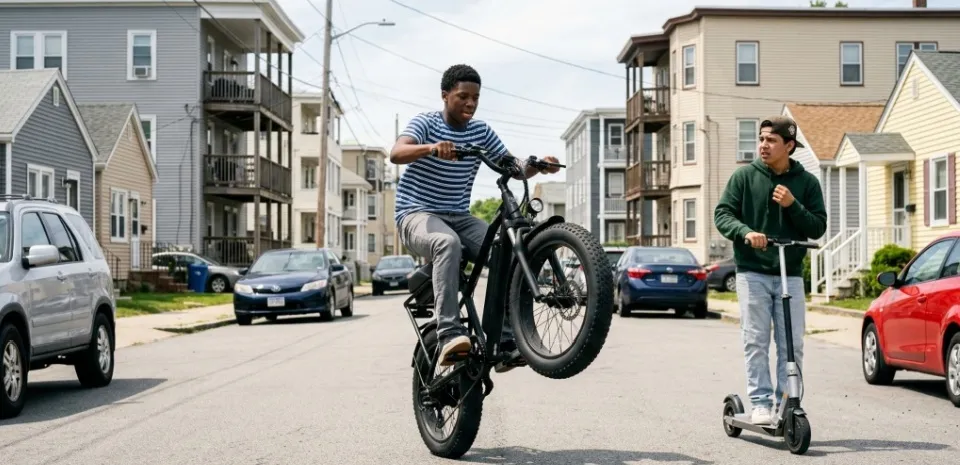
Imagine you’re riding your regular bike and hit some sand. You topple over, bruise your wrist and get some scratches on your arms and legs. And your tire rim is bent. Now imagine going 25 mph on your e-bike and hitting the same sand. The faster speed causes more force during your fall. You spin out of control, flip over your handlebars and end up in the emergency room needing stitches and a cast on your arm.
The American College of Surgeons (ACS) has recognized e-bike injuries as an emerging public health problem. The ACS estimates more than 20,000 e-bike injuries each year in the U.S., including about 3,000 hospitalizations. UMass Memorial Medical Center’s emergency room sees three to five trauma cases each week compared to about one every week during the same period last year.
Even with helmet use, there are significant injuries, particularly among those 8 to 18 years old, where inexperience and speed are a dangerous combination:
Injuries include:
- Broken bones
- Brain bleeds and other head injuries
- Facial fractures
- A small number of deaths
Reasons for the Increase in E-bike Injuries
There is a widespread misconception that e-bikes carry the same risk as traditional bicycles. They don’t. That and speed are primary factors for the increase in injuries and accidents. Other reasons include:
- Rider inexperience
- Risk-taking behavior
- Lack of safety gear and training
- Increased access to e-bikes among younger riders
- Affordability of electronic bikes and scooters
- Limited awareness and enforcement of safety regulations
E-bikes are heavier and accelerate faster while reaching higher speeds. Young riders may not have the judgement or reaction time to manage that speed.
Reduce E-Bike Accidents and Injuries
Parents must reinforce to their children the importance of responsibly using e-bikes and e-scooters and should personally oversee first uses of the vehicle to ensure that children are capable of controlling it.
- Learn your e-bike’s class (1, 2 or 3), top speed and motor assistance features. Check city or state regulations for e-bike use, such as not riding them on sidewalks or natural surface trails.
- Follow the rules of the road (e.g., stop signs, speed limits, signal use)
- It’s not enough to wear a helmet. It needs to be certified, properly fit and clipped under the chin.
- Never text or make phone calls while riding.
- Avoid using earbuds or headphones.
- Implement age restrictions; allow only older children to use electronic equipment.
- Provide rider training (i.e., learn how to handle the extra weight and speed). Look online for e-bike courses.
When To Seek Help After an Accident
Should an accident happen, look for these warning signs that could indicate the need for medical attention:
- Loss of consciousness
- Vomiting
- Severe headache
- Confusion
- Neck or back pain
- Trouble walking
- Deep cuts or heavy bleeding
- Pain, swelling or inability to move an arm or leg
Note: The content of this blog is for informational purposes only. It is not intended for use as diagnosis or treatment of a health problem or as a substitute for the professional consultation of a physician or qualified health care provider. If you have specific questions or concerns regarding a health or medical condition, contact your physician or a licensed health care professional.
You May Be Interested In

Urgent Care vs. Emergency Department

Prepare Your Home First-Aid Kit